
春节
Chinese New Year (Spring Festival)
chūnjié
Major period of family reunion, wishes, and prosperity rituals that opens the new lunar year.
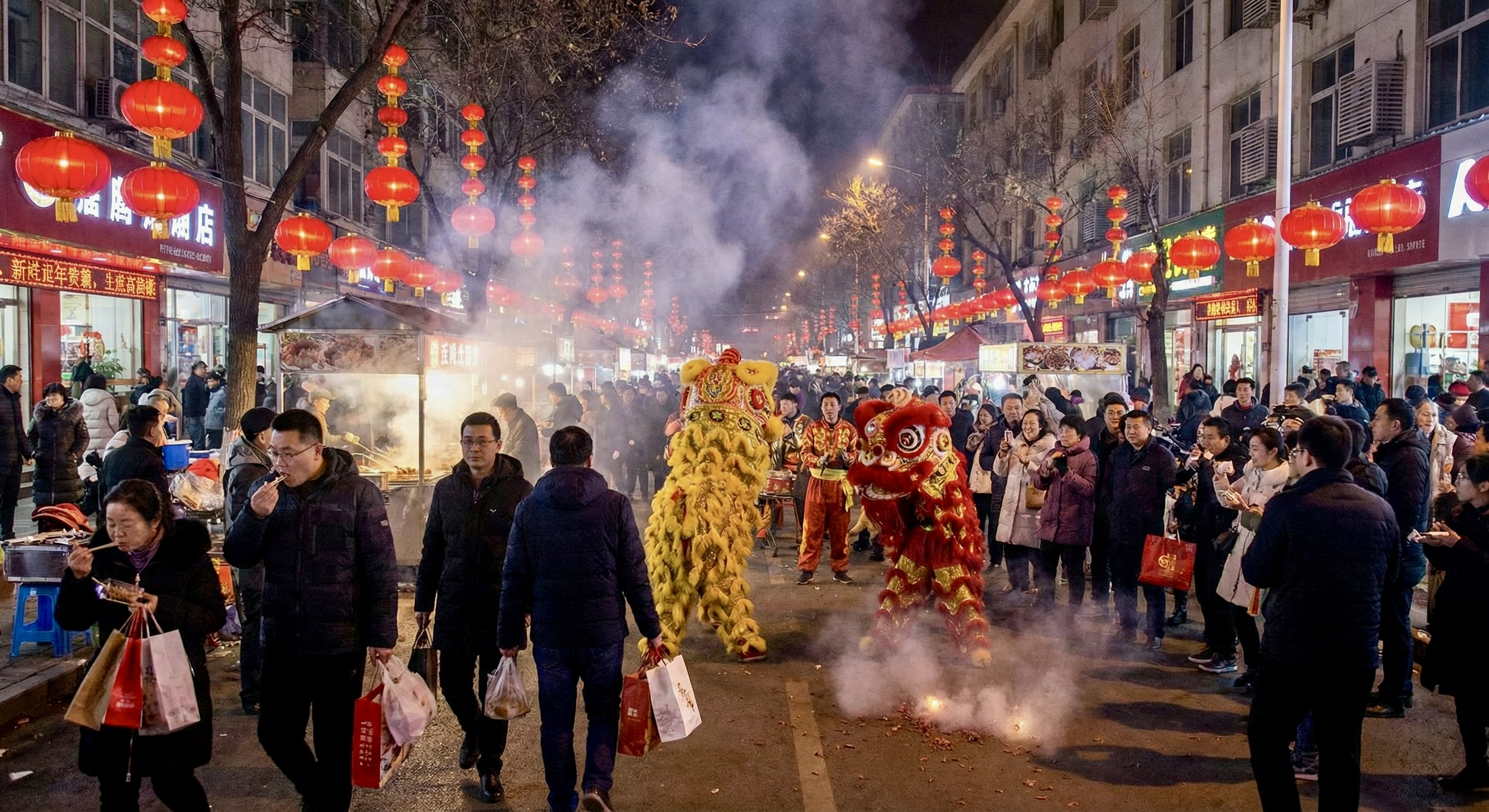
Context
The Chinese New Year is the most important traditional festival of the lunar calendar. In mainland China, the most frequent official term is Spring Festival (Chūnjié). The period combines household preparation, family mobility, and prosperity-related rituals, health, and family cohesion practices.
Rhythm of the festival
- Before the festival: cleaning the house, shopping, red decoration.
- New Year's Eve: family reunion dinner (niányèfàn).
- Following days: visits to close relatives, wishes, hóngbāo, local rituals.
- Closure: Lantern Festival (15th day of the 1st lunar month).
Cultural codes useful for learners
Red and gold are associated with good luck and abundance. The language of wishes is very formulaic: it is often more important to say a context-adapted phrase than the length of the message.
Useful vocabulary
- 过年 guònián: pass the New Year
- 红包 hóngbāo: red envelope
- 拜年 bàinián: present wishes
- 年夜饭 niányèfàn: New Year's Eve dinner